01
Lee Carolson
19 Nov 2026

Explain

More output isn't more work done

AI helped engineers write 30% more code. The work that shipped didn't move. Content is next.
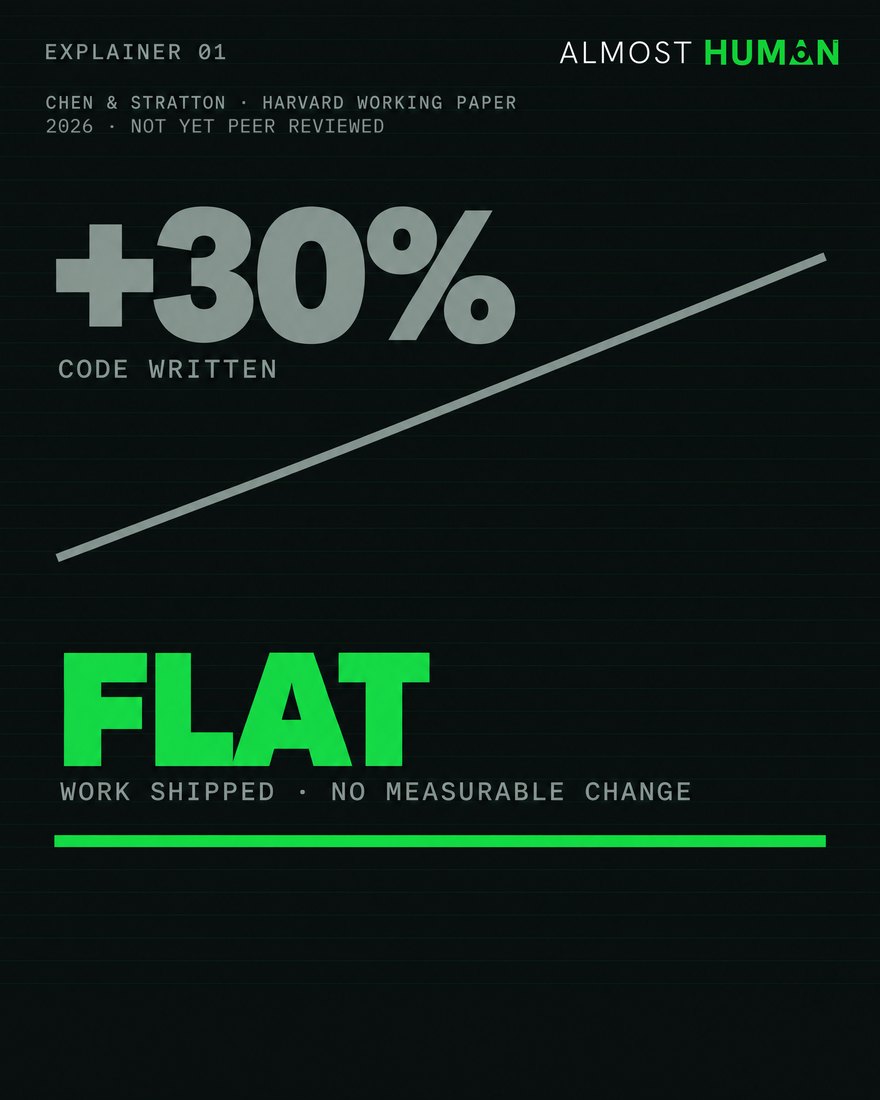
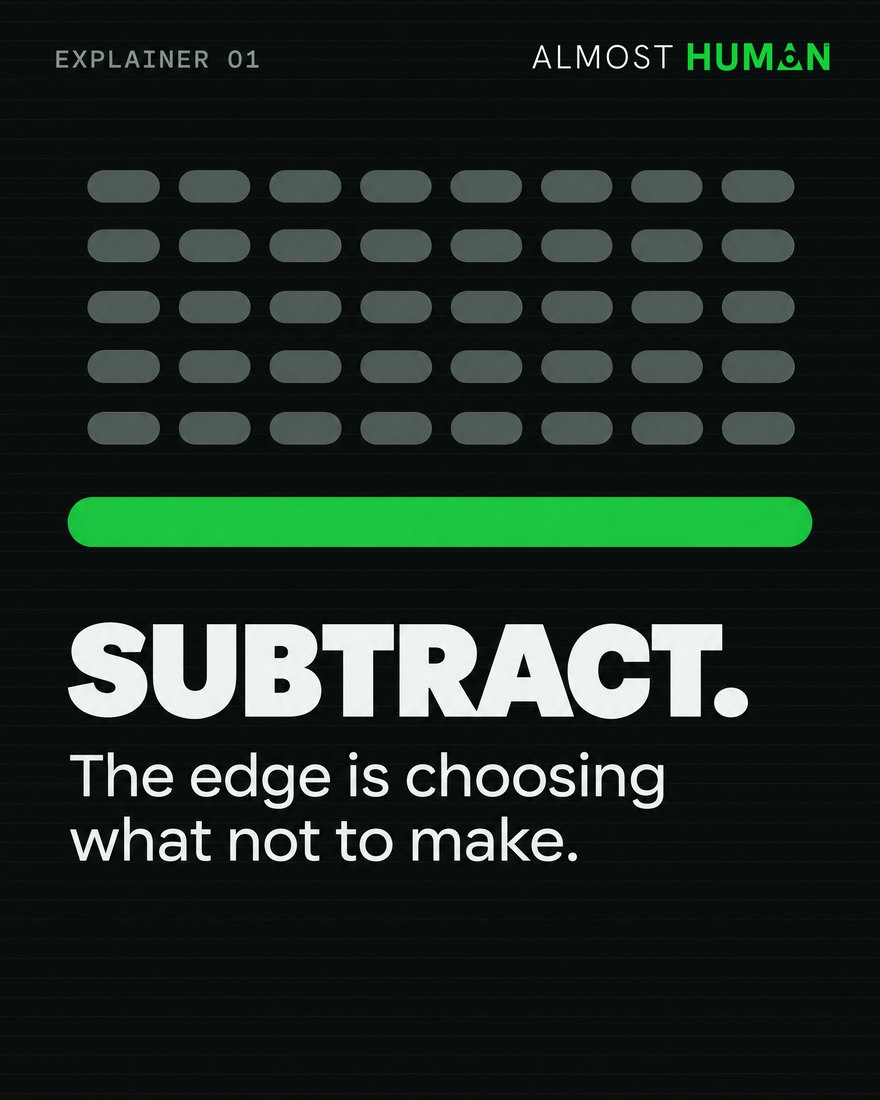
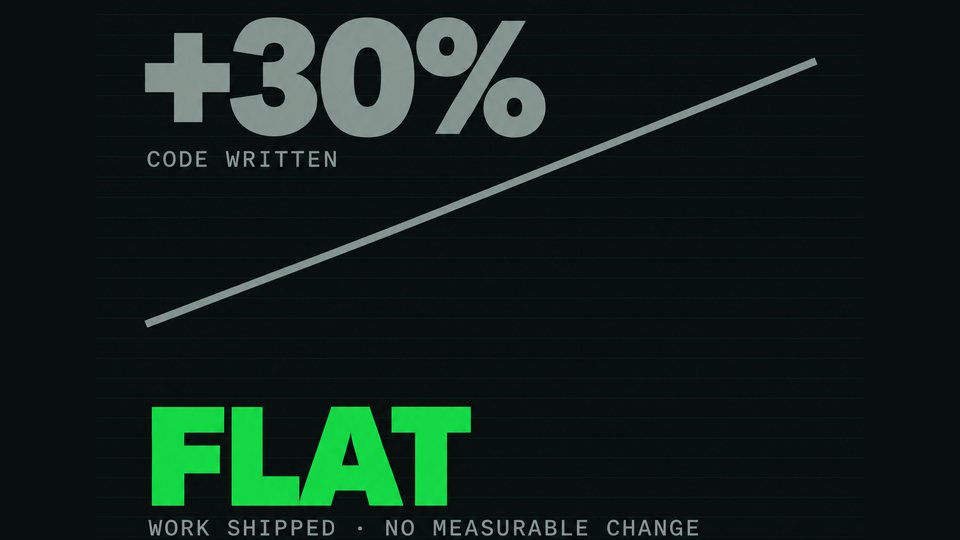
Explainer card: plus 30% code written, a rising line, and FLAT, work shipped, no measurable changeExplainer card: rows of grey pills above one green bar, with the words Subtract. The edge is choosing what not to make.

Images: Almost Human explainer cards, made in the studio.

A Harvard working paper tracked what happened when 718 software companies adopted AI coding agents. Engineers wrote about 30% more code. The amount of finished work didn't rise by any measurable amount.

More activity, same result. Busy is easy to mistake for effective, and it gets easier when output costs almost nothing.

Content is heading the same way. A brand can now make forty versions of an ad for what four used to cost. That was never the hard part. The hard part is deciding which of them should exist.

When supply goes up and attention doesn't, each piece is worth less. Push far enough and it stops being content and starts being noise.

There's an old lesson in this from football. In a study of penalty kicks, goalkeepers dived about 94% of the time. The few who stayed in the middle stopped around a third of shots. Divers stopped far fewer. Moving feels like doing something. It isn't always the right thing.

So the edge isn't making more. It's subtraction: choosing what not to make. That's why our Brief Builder asks what the one job of the film is before it asks about formats, and why we cut versions nobody will see before we make them.

What are you cutting this week?

Sources: Chen & Stratton, Harvard working paper (2026), not yet peer reviewed. Bar-Eli et al., Journal of Economic Psychology (2007).
02
Almost Human
19 Nov 2026

Method

When making gets fast, review gets slow

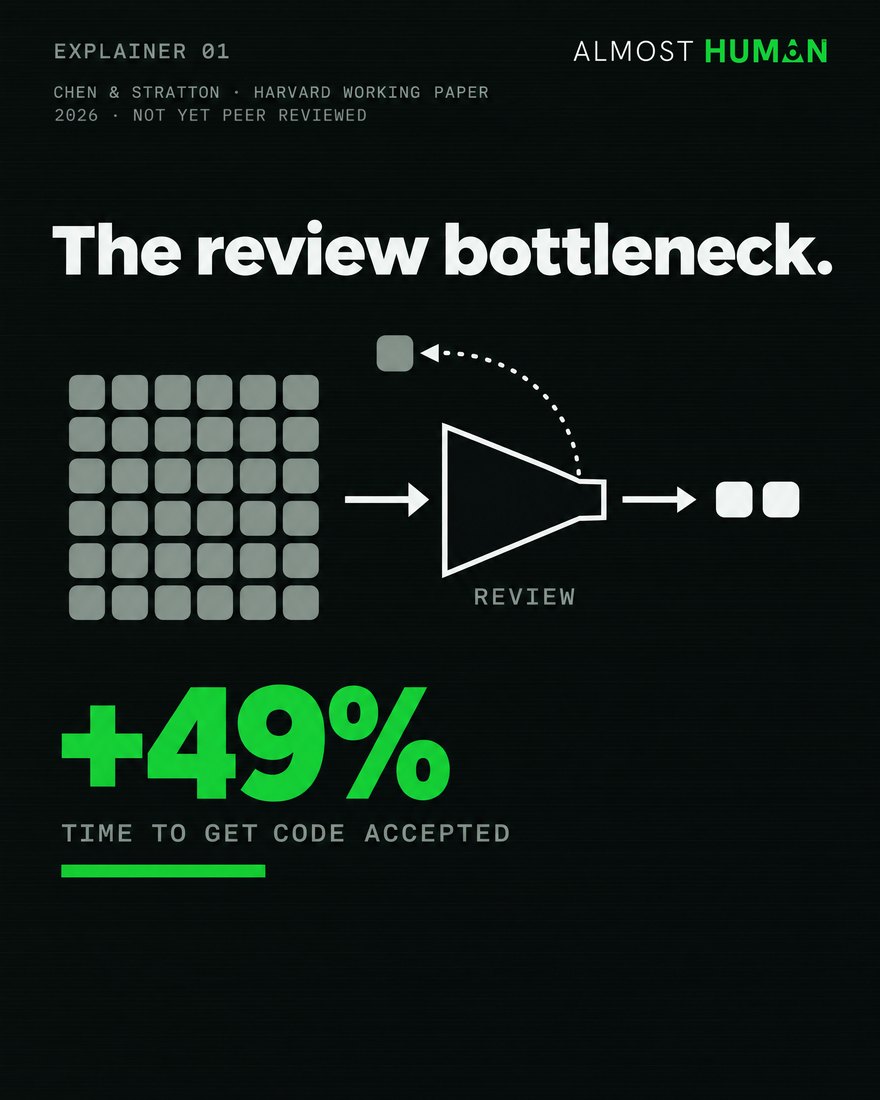
In the same study, code took 49% longer to get accepted. Why we build review into every job instead of bolting it on.

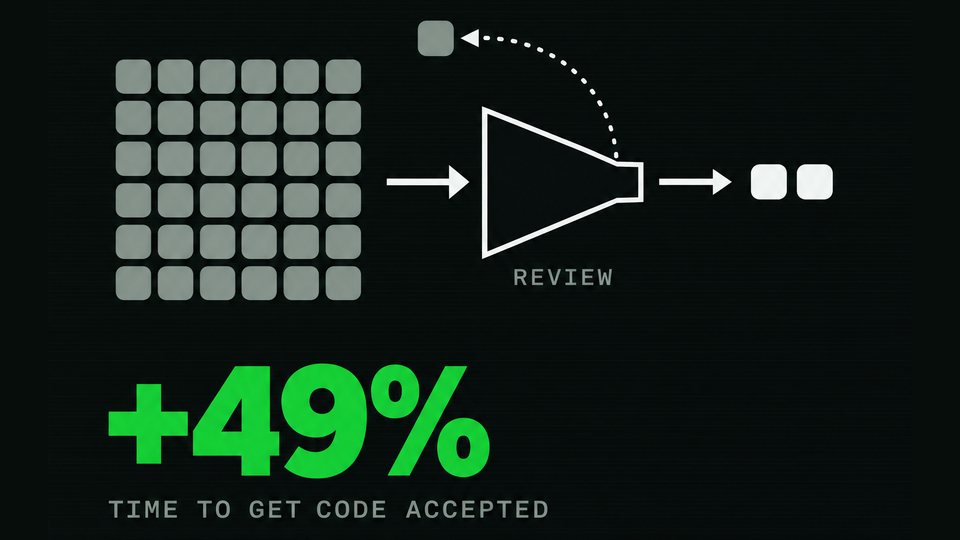
Explainer card: a grid of work squeezed through a review funnel, two pieces out the other side, and plus 49% time to get code accepted

Image: Almost Human explainer card, made in the studio.

The Harvard study found where the extra code went. It piled up at review. The time to get a change accepted rose 49%, from about seven days to about ten and a half.

AI sped up the making. It didn't speed up the checking. People still had to read, question and approve every piece, and now there was more of it.

Production works the same way. AI can get a first cut on screen in hours. Then it sits in a review queue, waiting on notes from five people who each see it differently.

We plan for that instead of being surprised by it:

  • Fewer, better options per round. Three strong directions get real feedback. Twelve get skimmed.
  • Review rounds built into every job. Each round costs less, so we can go round again, and the schedule already allows for it.
  • One crew, one pipeline. Notes go straight to the people making the change. Nothing waits on a vendor hand-off.

Fast making is only useful if the decisions keep up.

Source: Chen & Stratton, Harvard working paper (2026), not yet peer reviewed.

03
Almost Human
19 Nov 2026

Studio

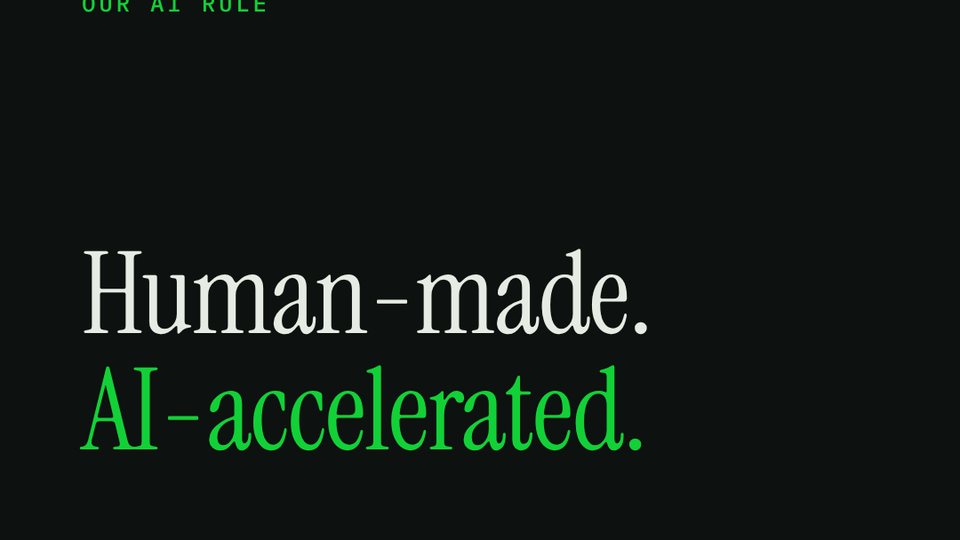
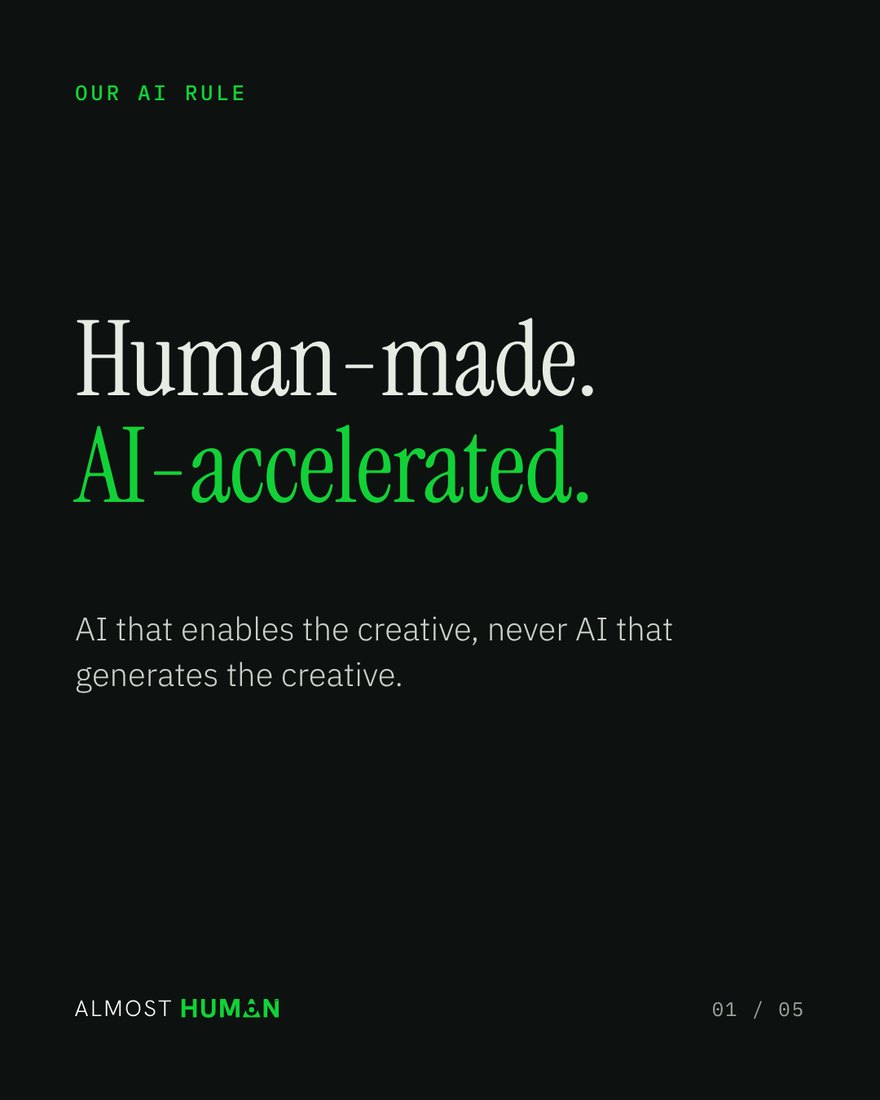
Human-made. AI-accelerated.

What stays human, where AI speeds us up, and how you can tell the difference.

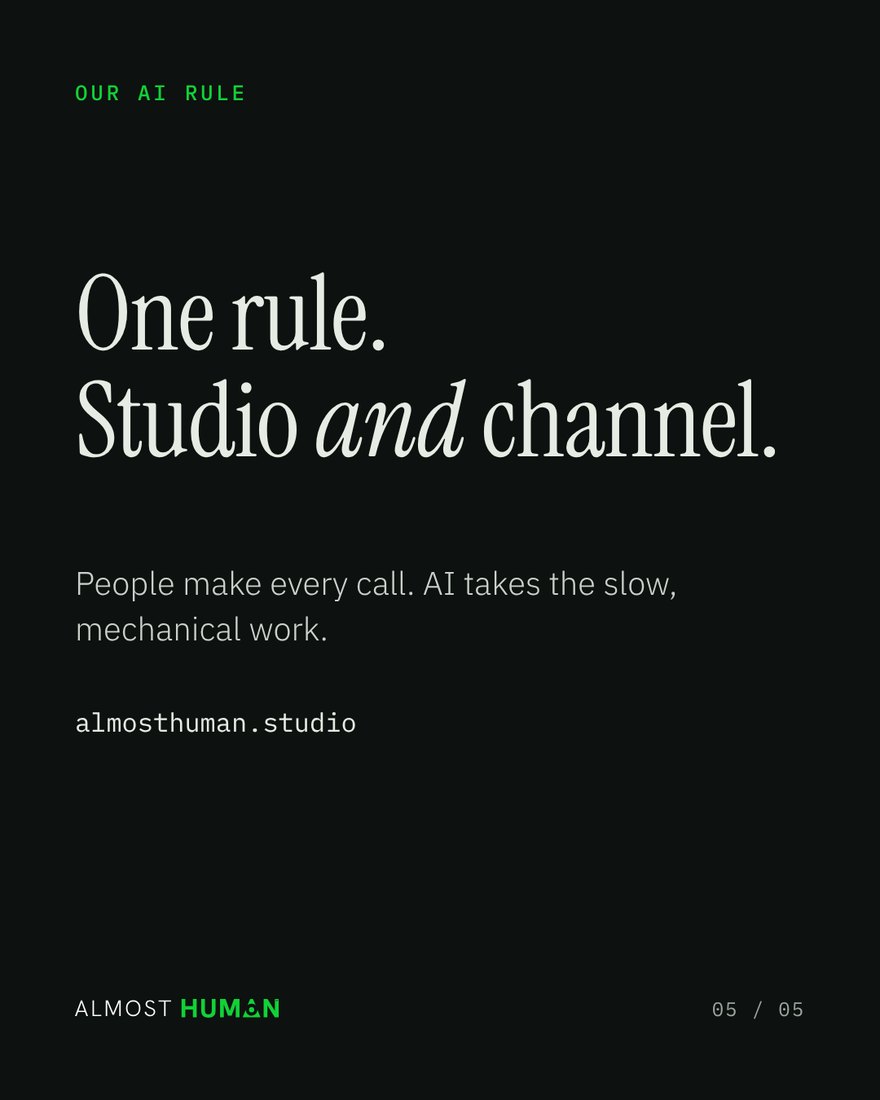
Card: Our AI rule. Human-made. AI-accelerated. AI that enables the creative, never AI that generates the creative.Card: One rule. Studio and channel. People make every call. AI takes the slow, mechanical work.

Images: Almost Human carousel, made in the studio.

We have one rule for the studio and the channel: creativity advanced, not replaced. AI enables the creative. It never generates it.

Always human

  • Ideas, concepts and worlds
  • Scripts and story
  • Performances, faces and voices
  • Creative direction and taste
  • The final cut and sign-off

Where AI accelerates

  • Research and prep, fact-checked
  • Full previs creative development
  • Roto, cleanup, tracking and upscaling
  • Dubbing and localization
  • Versions, cutdowns and captions

How we stay trusted

  • We disclose AI use, on the work and on this page.
  • Consent for every face and voice.
  • Content credentials are kept.
  • We show the making-of.

People make every call. AI takes the slow, mechanical work. That's the whole rule, and it's why the person who reads your brief is the person who directs it.